
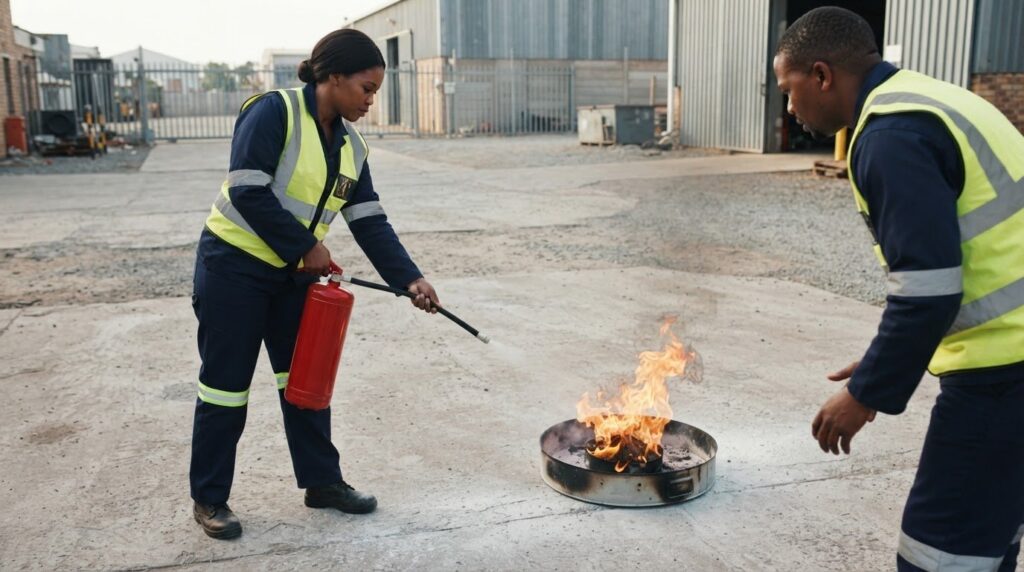
A safety training calendar alone doesn’t show whether employees are prepared for the risks in their roles. An effective annual safety training plan for employees should be based on workplace hazards and risks, cover safe work procedures and protective equipment, and revisit critical safety basics at least once each year.
Organisations know that training supports safer work and stronger compliance. The challenge is making sure it reflects actual working conditions and relevant requirements. This article explains how to assess training needs and plan coverage of hazard identification and reporting, personal protective equipment, accident prevention, emergency procedures and workplace safety policies.
It also looks at ways to reinforce learning throughout the year and review whether training is addressing knowledge gaps. The result is a practical framework for keeping safety responsibilities clear across roles, sites and changing work activities in South Africa.
Key Takeaways
- Base training priorities on the hazards and risks employees face in their roles, then review training records to identify gaps.
- Cover hazard identification, reporting and control, alongside the correct use of personal protective equipment.
- Connect accident prevention to the procedures employees need in their work areas, including how to respond to unsafe situations and emergencies.
- Make workplace safety policies, relevant requirements and record-keeping part of the training framework.
- Reinforce critical safety themes throughout the year with reminders, toolbox talks and refresher sessions.
Hazard communication and personal protective equipment
Employees need to recognise hazards to respond to them consistently. Training should explain how to identify, assess, report and control hazards in each work area. For example, a warehouse team may need to distinguish an obstructed walkway from a damaged load or leaking container. Employees should understand their role in the safety programme, which risks require control, and how their actions protect colleagues as well as themselves.
Connect hazard communication to the tasks employees perform. Explain workplace signs, labels and safety instructions, then show workers how to find and follow relevant procedures. Use site-specific examples, such as isolating an area after a spill and reporting the substance involved. Make training materials understandable and accessible to all employees, including those who need information presented differently.
Link each item of personal protective equipment to the hazard it is intended to address. Cover how employees select, use and care for their equipment, and report problems. Demonstrate practical checks, such as putting on protective gloves before handling a substance or securing a hard hat before entering a designated area. Explain that protective equipment supports safe work procedures; it does not eliminate the need to control hazards at their source.
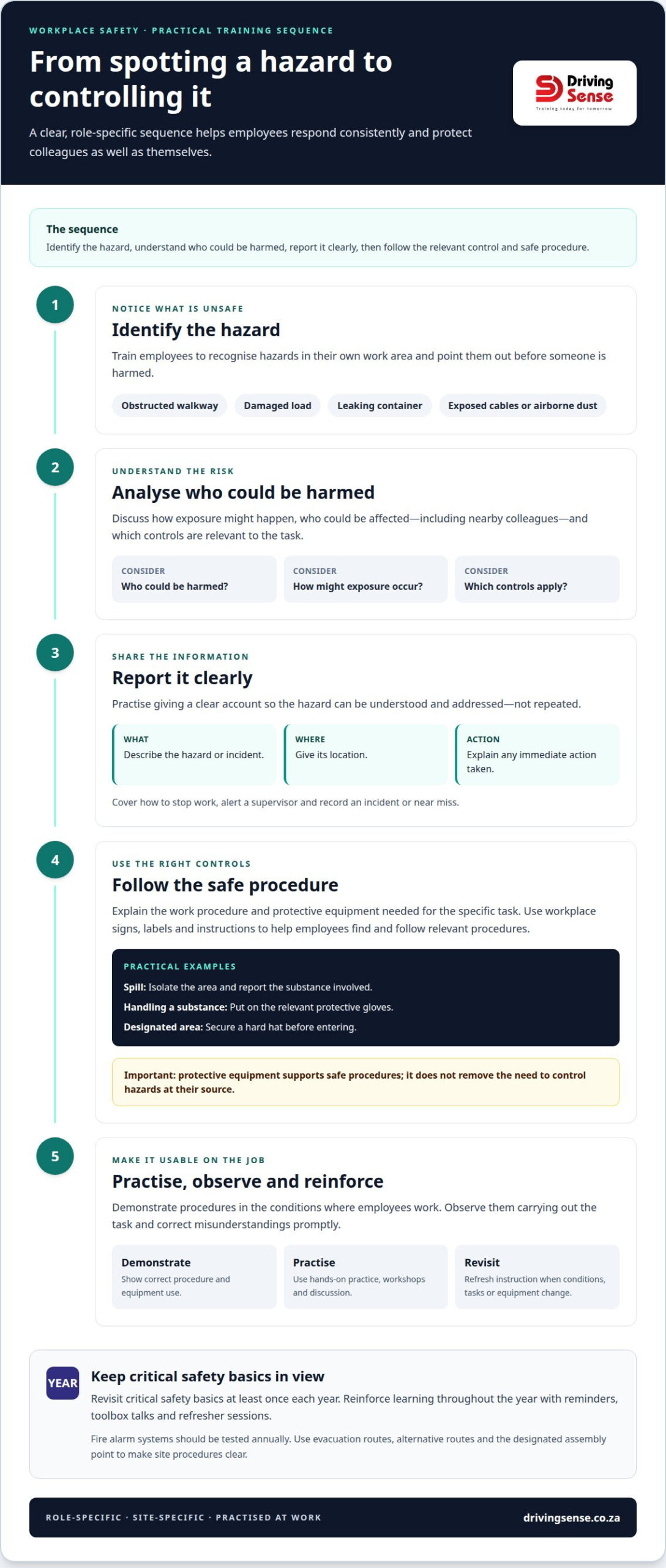
- Identify: Ask employees to point out hazards in their work area, such as exposed cables or airborne dust.
- Analyse: Discuss who could be harmed, how exposure might occur and which controls are relevant.
- Report: Practise giving a clear account of the hazard, its location and any immediate action taken.
- Control: Explain the safe procedure and the protective equipment needed for the specific task.
On-the-job instruction helps employees apply safety procedures in the conditions where they work. Supervisors can demonstrate a procedure, observe employees carrying it out and correct misunderstandings promptly. Presentations, hands-on practice and interactive workshops offer different ways to explain the same information. A demonstration can show correct equipment use, while a discussion can check whether employees know how to report a newly identified hazard.
Make respiratory protection training relevant to the substance or airborne hazard, the selected respirator and the task. Demonstrate how employees use and care for the equipment, and explain how to report damage or fit concerns. Revisit instruction when workplace conditions, tasks or protective equipment change, so employees do not rely on procedures that no longer match their work. In South Africa, align training with applicable requirements and the risks identified for each role.
Preventing accidents, injuries and fatalities
Connect accident prevention training to employees’ tasks, equipment and emergency procedures. Help teams recognise unsafe conditions, report incidents promptly and respond consistently.
Accident and injury prevention
Accident prevention involves identifying unsafe conditions and using work practices that reduce the chance of injury. An uncorrected hazard can put both the exposed employee and nearby colleagues at risk.
Use examples from actual work areas to explain safe procedures. For ladder tasks, teach workers to maintain three points of contact. For moving loads, explain how to keep walkways clear and report unstable stacking before someone passes beneath it. Cover how to stop work, alert a supervisor and record an incident or near miss, so hazards can be addressed rather than repeated.
Address heat stress practically in outdoor work and hot indoor areas. Explain how employees can recognise warning signs, follow workplace procedures, take appropriate breaks and access drinking water. Supervisors should consider the task, working conditions and employee reports when planning work. Anyone who feels unwell should promptly tell a supervisor and follow the site’s response procedure rather than continuing without support.
Fire prevention and evacuation drills
Fire prevention and evacuation training helps employees reduce ignition risks and leave a building safely when an alarm sounds. Confusion about exits, responsibilities or assembly points can delay an orderly response.
Use the site’s evacuation routes to show employees the nearest exit, alternative routes and designated assembly point. A drill lets teams practise raising the alarm, leaving equipment safely and assisting visitors who may not know the building. Fire alarm systems should be tested annually. Clarify who coordinates an evacuation and how employees report that their work area has been cleared.
Keep procedures specific to each workplace. A warehouse may need clear instructions for moving away from storage areas, while an office team needs to know which stairwell to use if its usual route is blocked. Review drill observations and incident reports to identify unclear instructions or access issues. Where the response depends on defined routes and roles, workplace evacuation planning can help structure those arrangements.
Combine demonstrations with discussion and practice. Employees can walk their evacuation route, identify alarm points and explain how they would report an unsafe condition. For heat-related risks, brief supervisors on escalation steps and include access to water in work planning. These practical checks turn written procedures into actions employees can apply during routine tasks and emergencies.
Keep instruction relevant to employees’ work environments, correct hazards before harm occurs, and reinforce prompt reporting and shared responsibility for workplace safety.
Assessing training needs
A training-needs assessment identifies workplace hazards and risks, then matches training to the employees exposed to them. This prevents a safety calendar from becoming a generic list that overlooks actual work. Office staff and warehouse teams, for example, may face different tasks, equipment and emergency procedures. Set their priorities accordingly rather than assuming one session covers every role equally.
Start by mapping work activities to the people who perform them. Include routine duties, occasional tasks and work carried out at different locations or on different shifts. A maintenance employee who enters plant areas may need different instruction from an administrative colleague, even at the same site. For each activity, record the relevant hazards, existing controls and procedures employees need to follow.
Use a consistent set of questions to identify gaps:
- What can cause harm? Record hazards associated with the task, work area, equipment or materials.
- Who could be affected? Include employees, supervisors and others whose work brings them into the area.
- What must employees know or do? Identify the procedure, reporting route or practical skill needed to manage the risk.
- What evidence shows a gap? Review incident reports, employee feedback, observations and existing training documents.
Compare required skills with current training records. A record may show that a topic was covered, but not whether employees can apply it to their tasks. Use assessments, surveys and feedback sessions to test understanding and identify where reinforcement is needed. If employees describe a reporting process differently, for example, the procedure may need clearer instruction or practice.
Changes to work can also shift training priorities. New equipment, revised procedures, different materials or changes in work areas may introduce unfamiliar risks. Review relevant training when these changes occur, rather than waiting for the next planned review. When an employee takes on a new task, assess the hazards and required competence before assuming earlier role-based training is sufficient.
Document the assessment and its decisions. A useful record links each priority to the affected role, identified risk, required learning and evidence used to assess understanding. Reviewing these records helps show whether training remains aligned with work activities. It also gives managers a basis for scheduling sessions, assigning responsibility and tracking unresolved gaps.
Use the findings to shape the programme, not simply to add sessions. Prioritise risks that require specific knowledge or practical skills, then choose a suitable method, such as a demonstration, workshop or supervised practice. Review assessment results and employee feedback after training. This links workplace risks to planned learning and helps improve future training.
Compliance with workplace safety policies and regulations
Explain the workplace rules employees must follow and how they apply to their duties. Required content depends on each role, the hazards involved and applicable South African requirements.
Refresher training frequency
Refresher training reinforces the procedures and knowledge employees need as conditions change. In South Africa, revisit critical safety basics at least once each year, using reminders, toolbox talks and refresher courses to reinforce procedures throughout the year.
That annual cycle is a planning baseline, not a substitute for role-specific requirements or additional instruction when work changes. For example, a revised procedure or new equipment may require focused training before employees carry out the changed task. Schedule refreshers around the risks and skills relevant to each group, rather than repeating identical material for every role.
Consequences of inadequate training
Inadequate training can leave employees less prepared to follow safe procedures, recognise risks and respond to incidents. Misunderstandings may contribute to unsafe work, injury, disruption and difficulty demonstrating that safety responsibilities were addressed.
For high-risk jobs and industries in South Africa, determine training by the hazards, tasks and equipment involved, as well as applicable workplace requirements. Employees need instruction suited to their duties, such as equipment operating procedures or emergency response. Inadequate training can expose an organisation to enforcement under applicable safety requirements; consequences depend on the breach and its circumstances.
No single training package fits every high-risk role. Work involving hazardous materials, for instance, needs different content from work involving vehicles or emergency response. Identify relevant duties and risks, then align training and records with those needs. This keeps the programme focused on what employees must understand and demonstrate.
Scheduling and documenting annual training
Scheduling and documentation help organise training across the year and record topics, attendance and follow-up. Managers can use these records to see which employees have completed relevant instruction and where gaps remain.
Plan sessions around work activities, shift patterns and operational changes. Rotate recurring themes so employees revisit critical safety basics at least once each year, then add toolbox talks or focused refreshers when conditions warrant them. Record each topic, date, attendance, assessment results and follow-up training. Review these records when updating the programme.
Workplace safety training costs depend on the case and are provided after a quote request; relevant factors include course scope, employee numbers, location and delivery requirements. Records of planned and completed sessions help organisations manage the schedule and identify outstanding learning needs. Employee feedback and assessments can also show whether future sessions should address specific knowledge gaps.
How often must employees receive health and safety refresher training in South Africa?
In South Africa, reinforce safety procedures throughout the year with reminders, toolbox talks and refresher courses. Rotate recurring themes so employees revisit critical safety basics at least once each year. This provides a planning rhythm, while hazards, duties and applicable requirements determine who needs further instruction and when.
Use the annual cycle to revisit topics employees must apply consistently, such as incident reporting, evacuation procedures and safe equipment use. Schedule further training when a risk assessment identifies a gap, work procedures change or an incident shows that employees need clearer instruction. A new task, for example, may require a practical briefing before employees begin.
Set timing according to what employees need to know for their roles, rather than treating every refresher as identical. A useful schedule distinguishes recurring awareness from task-specific competence:
- Throughout the year: reinforce relevant procedures through reminders and toolbox talks.
- At least once each year: revisit critical safety basics using rotating themes.
- When conditions change: provide focused instruction on new equipment, procedures or identified knowledge gaps.
Match the training method to the subject. A toolbox talk can reinforce a familiar reporting route, while hands-on training can help employees practise an emergency response. Follow each session with a short assessment or discussion. If employees cannot explain the procedure or apply it correctly, they need further instruction.
Supervisors can make the schedule practical by linking each session to a work group, topic and relevant activity. Teams working with vehicles may need reminders suited to their driving duties, while office employees may focus on evacuation arrangements. Record attendance, the subject covered and follow-up actions. These details help managers see which teams have received training and where gaps remain.
Review the calendar when feedback, assessments or workplace changes point to a new priority. If an employee is unsure about an emergency procedure, address the issue rather than waiting for the next annual theme. This keeps refresher training relevant to current work and supports a more responsive safety programme.
For support planning training around workplace risks and recurring safety topics, arrange employee safety training.
Programme requirements may set a more specific cycle than a general annual planning rhythm. Under OSHA’s hearing conservation standard, training must be repeated annually for each employee included in the programme, and information must be updated to reflect changes in protective equipment and work processes. This is a specific standard-based requirement, not a universal interval for every workplace. Check applicable requirements when setting a schedule, and review training material when relevant equipment or work processes change.
Stephen F. Austin State University requires employees to comply with applicable federal, state and local health and safety rules, regulations, codes and standards. This illustrates why a training plan should account for the rules that apply to an organisation and its employees, rather than relying on a calendar alone. The plan recommends reviewing training documents when evaluating the safety and health training programme. Consider these documents alongside changes in work processes and protective equipment to identify material that may need updating and assess whether training remains aligned with applicable requirements.
Driving Sense: Employee Wellness
Driving Sense offers Employee Wellness as part of its workplace safety services, alongside practical safety planning and training. Consider this support when employee wellness is relevant to your organisation’s safety priorities or when coordinating wellness with emergency preparedness.
Driving Sense also offers Evacuation Plans, Emergency Safety Training and Driver Training. These services address distinct needs: planning how people leave a workplace safely, preparing employees for emergency procedures and supporting safer driving practices. They can complement an annual training programme when these topics match employees’ duties and workplace risks.
To discuss Employee Wellness or related workplace safety training, contact Driving Sense.
Put your safety training plan into action
A plan works best when responsibility for each training priority is clear and learning connects to day-to-day work. Use your annual safety training plan for employees as a practical framework: assign ownership, keep sessions relevant to employees’ duties and adapt the programme as operational needs change. This makes safety part of routine decision-making rather than an isolated calendar activity.
Where additional support would help, Driving Sense offers Emergency Safety Training, Driver Training and Compliance Training. These services support organisations addressing emergency preparedness, driving-related risks or workplace compliance through relevant employee training.
Set the next step by identifying the training priority that most needs attention, then align the planned support with that need. Contact Driving Sense for safety training to discuss a suitable way forward for your organisation. A clear plan, supported by relevant training and ongoing review, gives your teams a practical foundation for strengthening workplace safety.
Frequently Asked Questions
What should an annual employee safety training plan include?
An annual safety training plan for employees should connect topics to work roles, hazards and organisational procedures. Include hazard reporting, protective equipment, accident prevention, emergency response and relevant compliance topics. Add a training calendar, responsible leads and a way to record attendance and understanding. A role-based matrix, for example, can show which teams need instruction on specific procedures, helping managers coordinate coverage without treating every employee’s duties as identical.
How do you assess workplace hazards and identify employee training needs?
Assess needs by matching each role’s actual tasks with the hazards employees may encounter and the knowledge those tasks require. Map activities by team, then consider how often employees perform them and what decisions they must make safely. For instance, compare an employee who handles a task occasionally with a colleague responsible for it routinely. This helps distinguish general awareness from the practical instruction needed for specific responsibilities.
What should a workplace emergency response and evacuation training plan cover?
Cover how employees recognise an alarm, communicate an emergency, leave safely and account for people at the assembly point. Clarify who reports missing colleagues and how employees raise concerns before anyone re-enters the building. Include practical arrangements for visitors, contractors and anyone who may need assistance during an evacuation. A tabletop exercise can test communication and decision-making, while a site walk-through helps employees understand how written arrangements apply to their workplace.
