
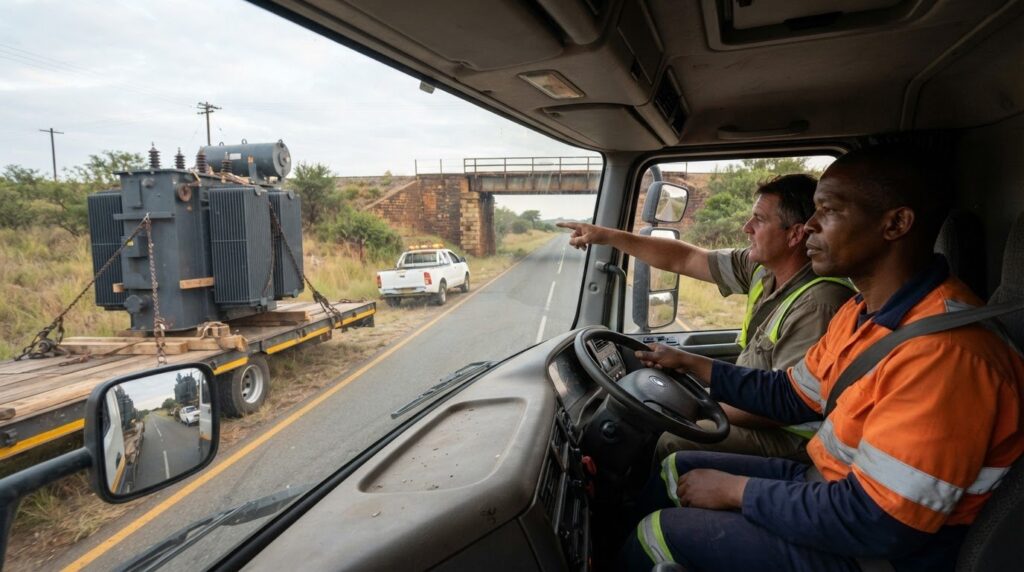
An abnormal-load movement depends on decisions made before departure. Effective training for transporting abnormal loads brings load assessment, permit requirements and route planning together, helping operational teams understand how each decision contributes to a safe, coordinated journey.
It is easy to focus on the vehicle and the load, but planning must also account for route constraints, suitable specialist vehicles, escort arrangements and the information personnel need before departure. Training helps teams understand how these responsibilities connect, rather than treating each as a separate task.
This article explains how load categories inform transport planning, what permits and route assessments involve, and how vehicle condition, escorts, documentation and industry codes fit into preparation. It also outlines how professional training can support consistent decisions across the team, while recognising that the right approach depends on each movement.
Key Takeaways
- Understand how abnormal indivisible load vehicle categories help frame the transport planning and training required for a movement.
- Learn which load and route considerations inform permit planning, and how these decisions connect to the journey’s operational requirements.
- See how specialist vehicles and extendable trailers fit into preparation, including pre-departure checks of vehicle and load condition.
- Recognise how personnel briefings, escort arrangements and accurate documentation support coordinated transport operations.
- Explore how industry codes and structured training can help teams apply consistent practices across abnormal-load movements.
Abnormal indivisible load vehicle categories
An abnormal indivisible load cannot be divided into two or more road loads without undue expense or risk of damage. That definition comes from the UK Road Vehicles (Authorisation of Special Types) (General) Order 2003, so it describes the UK legal framework, not South African requirements. For South African operations, training should distinguish concepts used for learning from the rules that govern the movement locally.
The course material covers abnormal indivisible load vehicle categories 1, 2 and 3. These categories give learners a framework for considering how vehicle configuration and load characteristics affect transport planning. They should not be treated as automatically equivalent to South African permit categories. A competent course explains the scope of each category and makes clear which operating context it addresses.
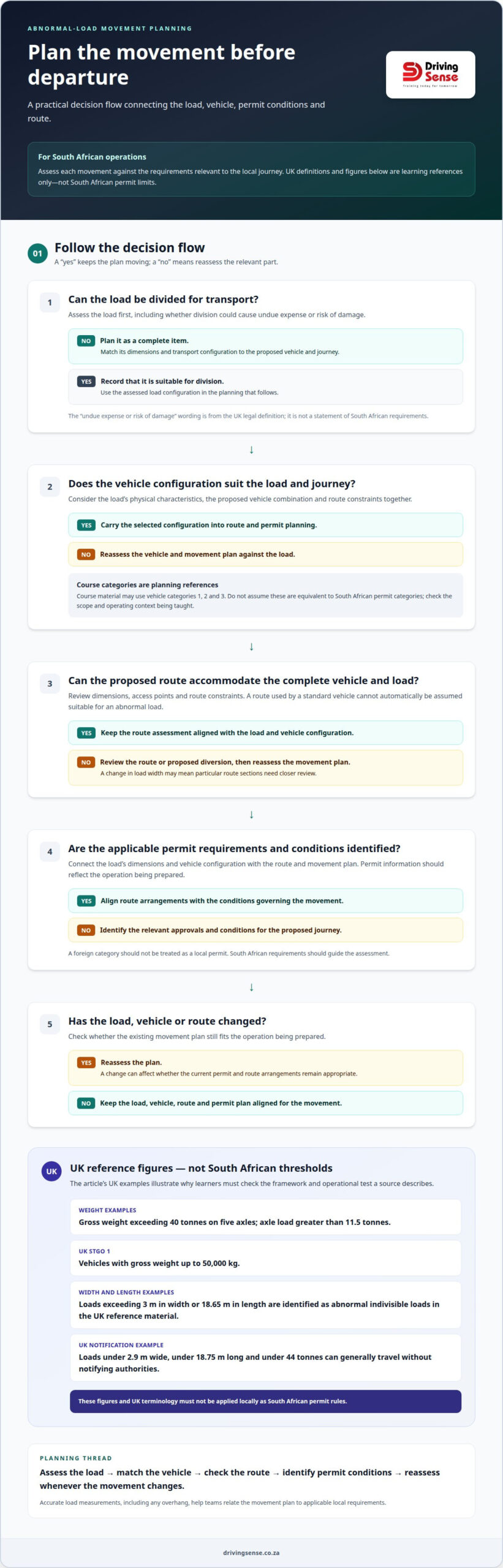
Why does indivisibility matter? A load that cannot reasonably be split must be planned as a complete item, taking its dimensions and transport configuration into account. For example, a large industrial component may need to travel as one unit because splitting it could damage the component or create undue expense. The practical training lesson is to assess the load first, then match the vehicle and movement plan to that assessment.
For a South African movement, training should connect category concepts to the actual transport task. Relevant factors include the load’s physical characteristics, the proposed vehicle combination and route constraints. This helps teams use categories as planning references while considering local requirements separately. UK thresholds or terminology should not be presented as South African limits.
Where can I find accredited abnormal-load transport training courses in South Africa? Look for a South African provider that explicitly covers abnormal-load transport and can explain how its accreditation applies to that training. The course should clarify its recognition and distinguish South African operating requirements from overseas frameworks.
In a structured programme, learners can work through the following sequence:
- Classify the load as indivisible or suitable for division, using the expense or damage considerations in the UK definition only as a UK reference.
- Identify which of categories 1, 2 or 3 the course material uses to frame the vehicle discussion.
- Relate the selected vehicle configuration to the load and proposed journey.
- Separate category-based learning from the requirements relevant to South African operations.
This sequence makes training for transporting abnormal loads more useful to planners and drivers by connecting terminology with operational decisions. Clearly distinguishing the UK definition, the three course categories and South African requirements also helps prevent a foreign framework from being mistaken for local rules.
The UK page identifies a gross weight exceeding 40 tonnes on five axles and an axle load greater than 11.5 tonnes as abnormal-load thresholds. UK STGO 1 permits vehicles with gross weight up to 50,000 kg.
Abnormal load permits and route planning
In South Africa, permit planning, vehicle selection, route assessment and load security should be considered together for each movement. Applicable requirements depend on the proposed load and journey. UK thresholds are not South African rules.
Permit Requirements
Permit planning identifies the approvals and conditions relevant to a proposed abnormal-load movement. Training should connect the load’s dimensions and vehicle configuration with the route and movement plan, so permit information reflects the operation being prepared. For a South African journey, the course should distinguish local requirements from overseas examples, rather than treating a foreign category as a local permit.
Personnel also need to understand how permit conditions relate to operational planning. A change to the load, vehicle or route can affect whether the existing movement plan remains appropriate. Training can teach a consistent sequence: establish the transport configuration, identify applicable permit requirements, then align route arrangements with the conditions governing the movement.
Route Planning
Route planning considers whether the chosen road journey can accommodate the complete vehicle and load. Training should address dimensions, access points and route constraints, and explain how a proposed diversion may change the assessment. A route suitable for a standard vehicle cannot be assumed suitable for an abnormal load simply because both journeys use the same roads.
A practical assessment connects route information with the permit plan and vehicle configuration. For example, a change in load width may mean particular sections of the planned route need closer review. South African requirements should guide the assessment. UK measurements can illustrate planning concepts, but cannot establish local permission.
Load Width and Length Thresholds
UK reference material identifies loads exceeding 3 m in width or 18.65 m in length as abnormal indivisible loads. It also states that loads under 2.9 m wide, under 18.75 m long and under 44 tonnes can generally travel without notifying authorities. These are UK figures, not South African thresholds, and must not be applied locally as permit rules.
Different UK figures illustrate why learners must check which definition or operational test a source describes. Training should teach teams to record the load’s full width and length, including any overhang, then relate those measurements to relevant South African requirements and permit conditions.
Loading and securing are part of the same planning process. Training should cover the load’s position, stability and restraint method, because movement in transit can affect safe handling and the planned configuration. Before departure, personnel should confirm that the vehicle and load match the assessed arrangement. For an overhanging load, the team must include the projection in its measurements and planning.
UK overhang guidance provides a further example, not a South African rule: up to 1 metre requires no additional requirements; 1-2 metres requires marking; and over 2 metres requires authority notification and additional markings. Training for transporting abnormal loads should make such jurisdictional distinctions explicit, while keeping the South African permit, route and load-securing assessment aligned.
Special vehicles and extendable trailers
Vehicle selection connects the load’s dimensions and weight to the planned journey. Training also covers checking the condition of the vehicle and load before departure.
Signage and Notifications
Signage and notifications are part of preparing a specialist vehicle for a particular movement. Consider their requirements alongside the load configuration, route plan and applicable permit conditions. A vehicle carrying a wide component, for example, may need different arrangements from one transporting a long item. Training should explain how personnel identify applicable conditions and communicate them before departure.
Notifications and signage are not interchangeable: one involves communicating movement information, while the other concerns how the vehicle or load is presented. The appropriate arrangements depend on the movement’s requirements. A structured pre-departure briefing helps drivers and other personnel understand which instructions apply, where they apply and how they relate to the journey.
Vehicle Dimensions and Weights
Assess the complete vehicle-and-load combination, not just the trailer. For an extendable trailer carrying a long industrial component, the deployed configuration changes the overall length. The assessment should also include the load’s position and any projection beyond the vehicle. These measurements inform vehicle suitability and route planning.
Weight also matters when matching equipment to the load. Training should connect the load’s weight with the chosen vehicle configuration and its planned use, rather than treating a vehicle’s appearance as proof of suitability. South African operating requirements govern local movements; overseas dimensions or limits do not establish local thresholds.
Extendable trailers allow the transport configuration to be adjusted to a load’s length. Set and secure the extension according to the equipment’s operating instructions, then include it in the complete vehicle assessment. Training should explain how the chosen configuration affects dimensions, load position and route planning. It should also cover why a trailer suited to one component may not suit another.
Before departure, training covers checks of transport vehicles and loads. Inspections should address the vehicle’s visible condition, the trailer’s configuration and whether the load remains in its planned position. For example, if an extendable section is not secured as intended, resolve the discrepancy before proceeding. This check connects equipment condition to the planned movement arrangements.
A practical pre-departure sequence can help personnel apply the same controls consistently:
- Confirm the vehicle and trailer configuration matches the planned load.
- Assess the complete dimensions, including any overhang or extension.
- Check the vehicle and load condition before departure.
- Review signage and notifications against the movement arrangements.
- Brief relevant personnel on the configuration and route instructions.
These checks help determine whether the selected vehicle remains appropriate for the movement. If the load, trailer setting or route changes, reassess that change before departure. This is central to training for transporting abnormal loads: consider the equipment, load and journey as one operational plan.
Attendants, escorts and documentation
Abnormal-load movements rely on clear communication between the driver, attendants and any escorts assigned to the operation. Effective preparation defines each person’s role before departure and connects those responsibilities to permit conditions, route planning and the load configuration.
An attendant supports the movement by carrying out duties assigned in the journey plan. An escort, when required for the operation, has a distinct role in coordinating around the vehicle and route. The team needs a shared understanding of who communicates with the driver, how instructions are passed on and what to do if the planned movement changes.
Consider a load approaching a route constraint identified during planning. The driver needs clear information from relevant personnel, not conflicting instructions from several people. A pre-departure briefing establishes how the team communicates, identifies important route information and confirms how it will respond to a change. Training should include briefing all personnel before departure.
Documentation supports a shared understanding of the operation. The permit, route plan, and vehicle and load details should refer to the same movement. If the paperwork describes a different configuration from the one prepared for departure, personnel may be working from inconsistent information. Training should show how the documents connect, who uses each record and how the team communicates changes.
Useful movement records can be organised around the operation’s key decisions:
- Permit information: conditions relevant to the planned movement and its configuration.
- Route plan: the route selected and constraints identified during planning.
- Vehicle and load details: the configuration assessed for the journey.
- Briefing record: the instructions and responsibilities communicated before departure.
This is an organisational framework, not a claim that every item is a legally prescribed document in South Africa. Applicable permit conditions and operating requirements determine which records are needed for a particular movement. Training should help personnel understand the difference and avoid treating a generic checklist as a substitute for movement-specific documentation.
Before departure, the team can align documentation and roles in a clear sequence. First, match permit information to the planned vehicle and load. Next, make sure attendants and escorts understand their assigned responsibilities. Then brief personnel on the route, communication arrangements and relevant instructions. Finally, communicate any change affecting the shared plan before the movement proceeds.
Clear records also support continuity when personnel change during preparation. For example, a replacement driver needs the current route plan and movement instructions, not an earlier version. Effective training for transporting abnormal loads treats documentation as an operational control, helping the driver, attendants and escorts work from the same current plan. This coordination makes the training relevant to every role involved in the journey.
Codes of practice and industry best practice
For South African movements, teams need to distinguish binding requirements from industry practices that support consistent planning. Applicable road-traffic requirements and permit conditions govern the movement. Training should also address risk controls and insurance considerations.
Laws and Regulations
South African abnormal-load operations must follow the requirements that apply to the vehicle, load and proposed route, including relevant permit conditions. Training should explain how teams identify these requirements and turn them into movement controls, rather than relying on UK rules or overseas codes as local law.
A practical compliance review connects approved movement details with the vehicle configuration and operating plan. If the route or load arrangement changes, personnel need to understand how that affects the plan and its conditions. This keeps legal compliance connected to day-to-day decisions.
Codes of practice and industry guidance can offer useful working methods, but they do not replace South African legal requirements. Good training explains which instructions are mandatory, which are procedural controls and how each applies to the movement. This distinction matters when a company uses international material alongside local operating procedures.
Risks and Penalties
An unsuitable vehicle, unsecured load or departure from permit conditions can create operational risks, including damage, disruption and danger to road users. A breach may also result in enforcement action or penalties under applicable requirements. Teams should understand the consequences of changing a movement plan without updating related controls.
Insurance is another consideration. Organisations should ensure their policy terms and declarations address the vehicle, load and type of movement being undertaken. Training can reinforce the need to align operational records with the actual arrangement, since a mismatch may complicate a claim.
Industry best practice turns obligations into repeatable controls. For example, an organisation can use a documented review to connect permit conditions, route instructions, vehicle details and personnel briefings. The review should clarify responsibilities, record material changes and ensure relevant team members receive updated information before departure.
Useful training also includes realistic scenarios. A route alteration, change to the load configuration or vehicle issue may require the team to reconsider its operational plan. Participants can practise identifying which information needs review, who needs to be informed and how to record the decision. This builds a consistent response without suggesting a generic code overrides local requirements.
For organisations strengthening governance, compliance training can support staff understanding of procedures, responsibilities and risk controls. A structured approach helps connect regulatory awareness with practical decisions, so personnel can apply the relevant requirements as part of abnormal-load planning.
Driving Sense
Driving Sense helps South African organisations build workforce capability through Driver Training and Compliance Training. These services can support teams responsible for transport operations by developing relevant driving knowledge and reinforcing consistent compliance practices. The focus can be tailored to an organisation’s training needs and the roles involved.
For abnormal-load transport, consider how driver competence and compliance responsibilities connect with the planning, vehicle checks and team coordination discussed here. Driving Sense provides professional training services to help organisations address these broader workforce development needs.
Contact Driving Sense to discuss your organisation’s training requirements.
Strengthen your team’s next step
Building a dependable abnormal-load operation is an ongoing organisational process. Start by identifying where your team needs clearer, role-specific knowledge, then align development with the responsibilities involved in planning and carrying out movements. Well-structured training for transporting abnormal loads can connect operational decisions with the expected practices of the workforce.
Driving Sense offers Driver Training, Compliance Training and Emergency Safety Training to support workforce development in driving, compliance and workplace safety. These areas can complement your organisation’s operational controls and help staff understand their responsibilities within established procedures.
Consider which roles would benefit most from further development and where a shared understanding could strengthen your transport operation. Contact Driving Sense to discuss training priorities suited to your organisation’s needs.
Contact Driving Sense about training and take a considered step towards strengthening your team’s capability.
Frequently Asked Questions
What training is required to transport abnormal loads in South Africa?
Training should prepare personnel to understand the operational responsibilities involved in abnormal-load movements. Relevant learning can cover vehicle and load assessment, permit and route considerations, pre-departure checks, communication, documentation and role-specific procedures. Select training that matches the duties performed by drivers, planners and other team members. For example, a driver’s practical preparation differs from the planning knowledge required by a transport coordinator.
Which licences and permits are needed to drive an abnormal-load vehicle in South Africa?
A driver’s licence relates to the vehicle being driven, while movement permit requirements relate to the load and planned journey. Applicable requirements depend on the vehicle configuration, load dimensions and route. Before preparing a movement, establish which licence class and permit conditions apply to that operation. Training helps personnel keep driver, vehicle, load and journey information aligned.
What topics are covered in abnormal-load driver and escort-vehicle training?
Training can cover safe movement coordination, communication between the driver and escort personnel, route awareness, vehicle and load condition, and journey records. A practical exercise might explore how an escort communicates a route change and how the driver acknowledges it. Clear roles matter: everyone needs to understand their assigned responsibilities and how to pass on relevant information during the operation.
