
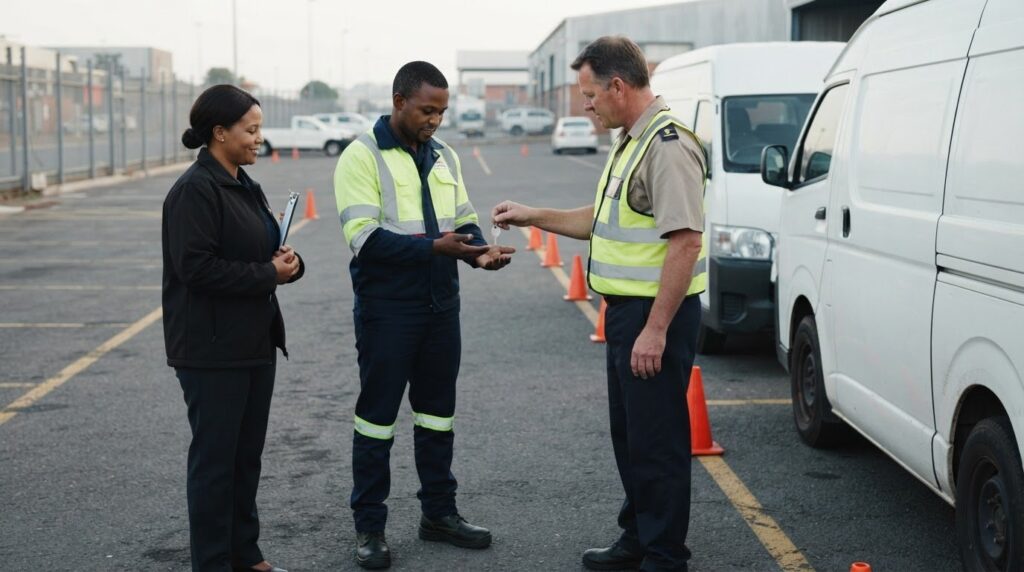
A driver safety incentive programme should reward safe decisions, not simply a clean record. When creating a driver safety incentive programme, set clear, achievable goals for safe speeds, following distance and avoiding mobile phone use, then reinforce them with practical training. Recognition can also mark milestones, such as completing a period of safe driving.
A reward may attract attention, but drivers need to understand which behaviours it recognises and how success is measured. Goals should be transparent, relevant to the work and attainable across different routes and driving conditions, so the programme supports fair, consistent decisions.
This guide explains how to communicate expectations, involve drivers and choose measures that reflect safe performance. It also shows how training can strengthen the behaviours being recognised, helping you build an incentive structure that supports ongoing learning and operational safety.
Key Takeaways
- Choose rewards that recognise safe conduct and meaningful milestones, and make the criteria clear to drivers.
- Explain how performance is assessed so expectations are transparent and consistent across the fleet.
- Involve drivers in shaping recognition to help keep the programme relevant and encourage participation.
- Set achievable goals based on measurable behaviours, then review results and adjust the programme as needed.
- Use relevant training to reinforce the safe practices the incentive programme is designed to recognise.
1. What’s a driver incentive programme?
A driver incentive programme links recognition or rewards to defined safe-driving behaviours and milestones. Its purpose is to reinforce habits such as maintaining safe speeds, leaving adequate following distance and avoiding mobile phone use. Set clear reward criteria and fund them through an approved safety or operational budget. This gives managers a defined spending limit and drivers a transparent path to recognition.
Reward options can include cash, merchandise, paid time off or personal acknowledgement from a manager. For example, a company might offer a cash bonus for maintaining a clean driving record for six months, then recognise a longer safe-driving milestone with paid time off. Merchandise can suit drivers who value practical items, while a choice of rewards can accommodate different preferences. Set the qualifying behaviour and assessment period before announcing each option.
Combine tangible rewards with recognition rather than treating them as alternatives. A manager could present a reward at a team meeting, explain the safe actions behind it and thank the driver directly. This makes the reason for the reward visible to colleagues, while private acknowledgement may suit drivers who prefer not to be singled out publicly. Name the specific behaviour, such as maintaining following distance on a demanding route.
Reward safe actions and useful reporting, not only the absence of incidents. A driver who reports a vehicle defect before departure gives the organisation an opportunity to address a hazard. Recognising that action can encourage reporting. Keep the distinction clear: a clean record may be one measure, but it should not discourage drivers from reporting incidents, near misses or hazards. Otherwise, the programme could make safety information less complete.
Proactive behaviours provide further opportunities for recognition. A programme might acknowledge drivers who maintain safe speeds, avoid mobile phone use and complete safety inspections consistently. It can also recognise improvement, giving drivers a path to progress without requiring a perfect past record. For example, managers could recognise a driver who responds to coaching by increasing following distance and sustaining that change in subsequent assessments.
Variety helps keep rewards meaningful across different roles and circumstances. A long-distance driver might value paid time off, while a local delivery driver may prefer merchandise or personal recognition. Use consistent eligibility rules, but allow reward types to reflect drivers’ preferences. Set out how each reward is earned, who assesses performance and when recognition occurs, so engagement rests on clear standards rather than manager discretion.
2. Communicating expectations and performance
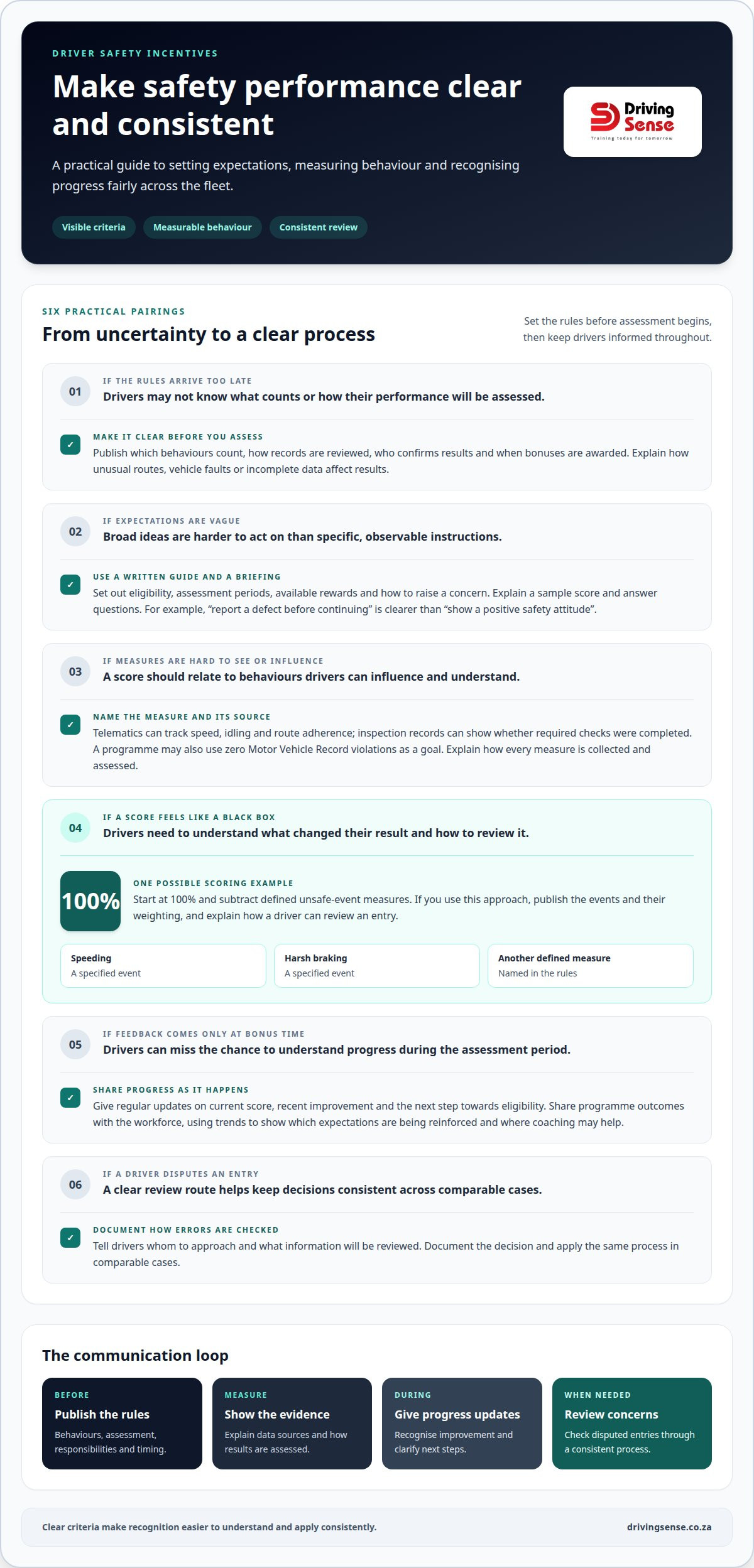
Publish the programme rules before assessing performance. State which behaviours count, how records are reviewed, who confirms results and when bonuses are awarded. For example, explain whether the assessment covers safe speeds, route adherence, vehicle inspections or reported hazards. Drivers should also know how unusual routes, vehicle faults or incomplete data affect their results. Clear procedures help managers apply the same standard across the fleet.
Use a written guide and briefing to communicate consistent expectations. The guide can set out eligibility, assessment periods, available rewards and how to raise a concern. In a team briefing, a manager can explain a sample score and answer questions about the rules. Keep the wording practical: “report a defect before continuing” is clearer than “show a positive safety attitude”. Specific instructions make the expected action observable.
Performance measures should relate directly to behaviours drivers can influence. Telematics can track speed, idling and route adherence, while inspection records can show whether required checks were completed. A programme may also use zero Motor Vehicle Record violations as a goal. Explain how each measure is collected and assessed; a score should not depend on data drivers cannot see or reasonably understand.
One scoring example starts with 100% and subtracts defined unsafe-event measures. If this approach is used, publish the events that reduce a score, their weighting and how drivers can review an entry. A clear record helps a driver understand whether a score changed because of speeding, harsh braking or another specified measure. It also gives managers a consistent basis for feedback, coaching and recognition.
Communicate progress during the assessment period, not only when bonuses are announced. Regular updates can show a driver’s current score, recent improvement and next step towards eligibility. For instance, a manager might recognise an improved route-adherence record, then explain which habits need attention. Share programme outcomes with the workforce, too, using trends to show which expectations are being reinforced and where additional coaching may help.
Provide a straightforward route for correcting errors. A driver who disputes an inspection entry or telematics event should know whom to approach and what information will be reviewed. Managers should document the decision and apply the same process in comparable cases. Consistent communication supports engagement and driver retention because recognition and bonuses are tied to visible criteria, rather than informal judgement. Driver Training can help reinforce the safe-driving expectations set out in the programme.
3. Driver engagement and retention
Drivers are more likely to engage when recognition reflects the realities of their work. Ask for feedback at scheduled meetings and record practical concerns such as delivery pressures, route changes or access to inspection facilities. Managers can use these points to assess whether a target is within a driver’s control. When drivers see their input reflected in programme decisions, recognition becomes part of a working relationship, not simply a reward imposed from above.
In South Africa, commercial driving risks include speeding, distraction, inadequate following distance, fatigue and vehicle defects. Route conditions and operational pressures also affect the decisions drivers face. A useful discussion might examine how to maintain a safe following distance when traffic changes, or how to report a defect before continuing. Recognition should reinforce safe actions and responsible reporting, rather than reward speed or incident-free records alone.
Engagement also depends on how managers deliver recognition. A brief, specific acknowledgement is more meaningful than a generic announcement. For example, a manager can explain how a driver’s prompt defect report helped the team address a vehicle concern. Some drivers may value public recognition at a meeting, while others may prefer a private conversation. Offer suitable options and invite feedback on which forms of recognition feel relevant.
Retention and safety can support each other when a programme values consistent, sustainable habits. A driver who stays with an organisation can build familiarity with its vehicles, routes and procedures; managers can reinforce that experience through coaching and fair recognition. Avoid goals that reward unrealistic delivery pace, since pressure to meet targets can conflict with safe driving. Instead, recognise careful inspections, hazard reporting and adherence to safe procedures during demanding shifts.
Review safety and retention results together, rather than treating them as separate measures. Each quarter, managers can examine incident patterns, inspection records, driver feedback and staff turnover alongside programme participation. If engagement rises but near-miss reports fall, discuss whether the programme unintentionally discourages reporting. If drivers leave despite receiving rewards, use exit feedback and meeting discussions to identify concerns such as inconsistent management or impractical targets.
Use each review to make a documented adjustment. For example, if drivers say a measure penalises delays caused by route conditions, revise how it is assessed and explain the change to the team. Share the reasons for adjustments, the behaviours still being recognised and the next review point. This process supports fair rewards, holds managers accountable and connects recognition with safer habits and longer-term retention.
4. Setting measurable and achievable goals
Start by identifying the safety outcome each fleet needs to improve, then choose a metric that reflects driver behaviour. For example, a company may target a 20% reduction in harsh braking events. Define how the events are recorded, which vehicles are included and how the reduction will be calculated. A precise measure lets managers assess progress consistently and gives drivers a clear standard to achieve.
Establish a baseline before setting the target. Track normal operating conditions for 30 days before launch, including the chosen metric and the data used to calculate it. This provides a reference for distinguishing actual improvement from ordinary changes in routes, workloads or vehicle use. If harsh braking is the measure, record the starting event rate across the relevant fleet, then use the same method during later assessments.
Keep each goal specific, measurable and within drivers’ influence. A fleet could pair a reduction in harsh braking with goals for completed vehicle inspections or hazard reports. These measures recognise different aspects of safe work rather than relying on one score to represent every situation. Avoid targets based only on delivery speed, since drivers may face changing traffic, route or loading conditions beyond their control.
In South Africa, design an incentive programme to support applicable workplace health-and-safety and road-traffic requirements. Rewards must not replace legal compliance. Separate mandatory standards from additional improvement goals, and make clear that meeting a reward target does not excuse unsafe conduct. For example, a driver must still follow the organisation’s required safety procedures, even if a delivery target is at risk.
Set realistic targets by reviewing the baseline, operating conditions and past performance. If harsh-braking rates vary between routes, assess route-level patterns before choosing a single fleet-wide threshold. One target can seem unfair when drivers face different vehicle types or working conditions. Use comparable groups or consistent adjustment rules, and explain each comparison before the incentive period begins.
Define programme success separately from individual eligibility. An organisation might measure whether fleet-wide harsh braking declines, inspections are completed more often and drivers understand the goals. Each metric should have an owner, data source and review point. Managers can then identify whether a target is too easy, too difficult or poorly matched to the risk. Document and explain adjustments to preserve a consistent safety culture as the programme develops.
Set a review process before launching the goals. Compare results with the baseline, consider driver feedback and check whether the metrics still reflect operational risks. If a target encourages rushed work or discourages hazard reporting, revise its design. Measurable goals should help fleets improve safe habits, make practical progress and maintain a fair link between performance and recognition.
5. Including training in incentive programmes
Training gives an incentive programme a practical path from recognition to lasting skill. Identify the behaviour behind each goal, then match it with instruction and practice. If a fleet rewards safe following distance, for example, training can cover hazard anticipation and appropriate spacing in changing traffic. Assess whether drivers can apply the technique, rather than awarding points for attendance alone. This grounds recognition in demonstrated improvement.
A regular learning rhythm helps keep safety knowledge active. A truck safety meeting held weekly for 10 to 15 minutes can cycle through 12 topics about once a quarter. Use each meeting to connect one topic with an observable action, such as completing a vehicle inspection or responding safely to a developing hazard. Short, focused discussions also create opportunities for drivers to raise questions from their daily routes.
Link each training topic to a transparent measure. After instruction on vehicle inspections, managers can assess inspection records and discuss recurring omissions. Following a session on safe speeds, review the relevant performance metric and clarify how drivers can improve. Explain how the measure affects programme points before assessment begins. This makes the relationship between learning, performance and reward clear, while giving drivers a defined next step.
Training should include practice and feedback, not just information. A facilitator can present a route-based scenario, ask drivers to identify hazards, then discuss decisions that reduce risk. A driver who needs improvement can receive focused coaching and another opportunity to demonstrate the skill. Recognise progress as well as high scores, so the programme encourages learning instead of presenting safety as an all-or-nothing outcome.
Reinforcement matters because people can lose up to 90% of new information within a week without reinforcement. Follow a training session with a brief reminder, a practical discussion or a supervised application of the skill. For example, after instruction on safe following distance, a manager can ask drivers to describe how they would adapt spacing when traffic conditions change. Repeated opportunities help turn the lesson into a work habit.
Keep recognition fair and privacy-conscious. Share general training outcomes publicly, such as the topic completed or a team’s progress, but discuss an individual’s coaching needs privately. Make the criteria for points and improvement visible to all drivers, then record training, feedback and reassessment consistently. To strengthen programme goals with practical driver instruction, explore Driver Training for your workforce.
Driving Sense: Emergency Safety Training
Driving Sense provides Emergency Safety Training to help organisations prepare employees to respond appropriately when an emergency arises. This training can complement an incentive programme by strengthening practical readiness alongside safe-driving goals. Where the programme focuses on driving behaviour, Driver Training can support the skills and practices drivers are expected to demonstrate. Compliance Training can reinforce relevant workplace procedures.
Consider training when performance reviews identify a recurring knowledge or skills gap, or when programme goals change. For example, if drivers need to improve how they respond to vehicle-related hazards, align instruction with the behaviours your programme recognises. This gives employees a clearer connection between learning, safe work and recognition.
Contact Driving Sense to discuss training that supports your organisation’s safety objectives.
Turn your programme into an ongoing safety practice
Treat the launch as the beginning of a learning process, not the finish line. As drivers respond to the programme, use their feedback and performance trends to refine its priorities and keep recognition aligned with their work. This helps the incentive remain relevant as routes, vehicles and operational demands change.
Creating a driver safety incentive programme is most effective when its expectations are reinforced through practical learning. Driving Sense offers Emergency Safety Training, Driver Training and Compliance Training to support organisations addressing workplace safety and driver capability. If your next step is to align training with your programme’s goals, contact Driving Sense today. A considered approach can help your organisation build a stronger, more consistent safety culture.
Frequently Asked Questions
What’s a driver incentive programme?
A driver incentive programme is a documented arrangement linking recognition or rewards to agreed driving standards. For example, an operator could recognise a driver who reports a tyre defect before departure, even if the report delays a journey. Define eligibility, assessment records and how managers handle exceptional circumstances, so recognition supports safe decisions rather than simply rewarding output.
How do you create a driver safety incentive programme?
When creating a driver safety incentive programme, first identify the operational risk the organisation wants to address. Select a behaviour drivers can influence, decide how evidence will be gathered and establish a review process. If reversing incidents are a concern, for instance, pair practical guidance with observation records and feedback. Test the rules with a representative group, resolve confusion, then communicate the final criteria before wider implementation.
What safety metrics should a driver incentive programme measure?
Choose measures that show both behaviour and outcomes, such as speeding events, harsh braking, completed inspections, near-miss reports, preventable collisions and vehicle downtime. Pair event totals with context, such as distance travelled or shifts worked, so busier routes are not automatically judged less safe. Keep data definitions stable across reviews, and use driver discussions to interpret unusual changes rather than treating a dashboard score as the whole explanation.
What rewards motivate drivers to improve road safety?
Rewards are more meaningful when drivers value them and understand the achievement behind them. Offer options such as personal acknowledgement, useful merchandise, paid time off or a cash award, subject to organisational policy. One driver may welcome public recognition, while another prefers a private note. Ask drivers about their preferences before launch, then review which rewards are taken up; low participation may mean the options need reconsideration.
How can a driver safety programme avoid encouraging unsafe behaviour or underreporting incidents?
Don’t make an injury-free record the only route to a reward, because that can make reporting feel costly. Recognise timely hazard and near-miss reports, and assess safe actions rather than simply counting reports. Keep reporting channels separate from reward eligibility decisions, investigate reports consistently and explain how they are considered. Review sudden drops in reporting as carefully as increases, since fewer reports don’t automatically mean safer driving.
What are the costs and benefits of driver safety incentive programmes?
Costs include reward funding, manager time, data administration and training time; the balance depends on fleet size, measurement methods and reward choices. Potential benefits include clearer expectations, stronger reporting habits and more focused coaching. Compare the programme’s operating effort with changes in safety records, vehicle downtime and retention, rather than treating reward spending alone as the return. Keep essential safety controls funded independently of incentive rewards.
How can employers measure whether a driver incentive programme is effective?
Compare results with a baseline, using the same definitions and data sources at each review. Review outcomes quarterly, separating leading indicators, such as inspection completion and hazard reports, from results such as collisions or vehicle damage. Check participation and driver feedback as well. If scores improve while reports decline or turnover rises, examine whether reward rules have distorted behaviour before attributing the change to safer driving.
How should employers communicate, launch and review a driver safety incentive programme?
Before launch, issue a plain-language guide covering eligibility, evidence, disputes and reward decisions, then discuss a sample case at a team meeting. Give drivers a clear internal contact for questions and explain how updates will be shared. During the programme, publish progress consistently and invite feedback across routes and shifts. At each quarterly review, explain any changes, their rationale and when revised rules take effect.
