

Poor mental health can affect a driver’s wellbeing and ability to concentrate on the road. For professional drivers in South Africa, concerns may include stress, anxiety, depression, loneliness and difficulty sleeping. Mental health support for professional drivers can include personal self-care, speaking with a health professional and practical workplace support.
The pressures of driving for work can make it harder to maintain routines and stay connected with family, friends and colleagues. Persistent sadness, anxiety or difficulty concentrating deserves attention. A GP or mental health professional can assess what is happening and discuss appropriate support.
This article explains the concerns drivers may experience, practical steps that can support day-to-day wellbeing, and where to seek professional help. It also explores how medical discussions specific to driving and workplace measures can contribute to a structured approach to wellbeing and road safety.
Key Takeaways
- Recognise how stress, anxiety, depression, loneliness and poor sleep can affect drivers’ wellbeing and concentration.
- Learn how regular check-ins, manageable work demands and access to professional support can strengthen workplace psychological safety.
- Use practical routines, such as movement during breaks, staying connected and protecting sleep, to support day-to-day wellbeing.
- Speak to a GP or mental health professional about persistent changes in mood or concentration; only a trained professional can diagnose a mental illness.
- Understand how driver-specific medical discussions and workplace safety measures can contribute to a more structured support approach in South Africa.
1. Which mental health concerns and conditions are affecting the industry?
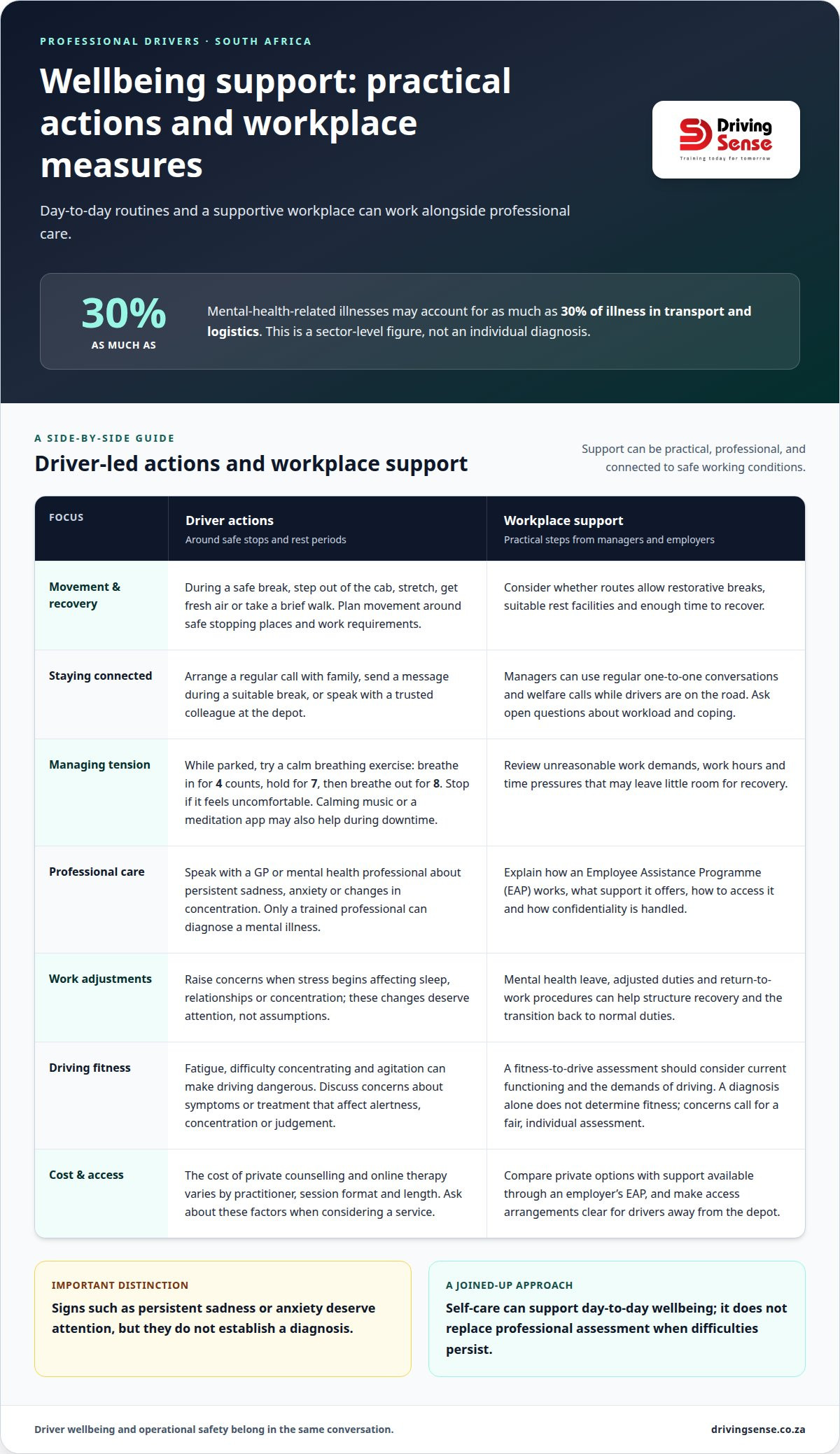
Mental-health-related illnesses may account for as much as 30% of illness in transport and logistics. Depression and anxiety are also concerns in heavy vehicle transport, where long periods driving alone can make workplace support harder to access. Unreasonable job demands, work hours and time pressures can add psychological strain.
Watch for changes that affect daily functioning. Fatigue, difficulty concentrating and agitation can make driving dangerous, while persistent sadness or anxiety can interfere with work and rest. These signs do not establish a diagnosis. Only a trained professional can diagnose mental illness, so a driver’s difficulties deserve attention rather than assumptions.
In South Africa, employment and equality protections are relevant when a driver seeks mental health care and may face workplace discrimination. The circumstances matter, including the employment decision, the role’s safety requirements and the driver’s ability to perform their duties. Employers should address specific concerns through a fair, individual assessment, not rely on a diagnosis alone.
Employee Assistance Programmes (EAPs) can provide access to professional support, but drivers need to know how the service works. A driver may be unaware that an EAP exists, be away from the depot or have questions about confidentiality. Employers can explain how to access the programme, what support it offers and how privacy is handled.
Regular one-to-one meetings give managers a practical opportunity to ask open questions, such as, “How are you coping with your workload?” A welfare call while a driver is on the road can also maintain contact. These conversations should make it easy to raise concerns and agree on a next step, such as speaking with a mental health professional or taking time away from work.
Other measures include reviewing unreasonable work demands, offering mental health leave and adjusting duties to support recovery. Employers can also establish return-to-work procedures so responsibilities and support are discussed before a driver resumes normal duties. These steps connect wellbeing with operational safety instead of treating them as separate concerns.
A mental health condition can affect a professional driver’s fitness-to-drive assessment if symptoms or treatment affect concentration, alertness or judgement. A diagnosis alone does not determine fitness. The assessment should consider the person’s current functioning and the demands of driving.
The cost of private counselling and online therapy in South Africa varies according to the practitioner, session format and length. Ask about these factors when considering a service, and compare them with any support available through an employer’s EAP.
Stress, loneliness, and physical inactivity
Long stretches alone in a cab can reduce everyday contact with colleagues, friends and family. For a driver travelling across South Africa, distance from home may make ordinary conversations harder to maintain. Loneliness is not the same as choosing time alone; it can mean feeling disconnected despite occasional calls or messages. Persistent isolation can coincide with low mood, reduced motivation and less interest in usual activities, including exercise.
Work-related stress can build when schedules leave little room for recovery, changes or meaningful contact. A late delivery, traffic delay or uncertainty about a rest stop can keep a driver tense after the immediate problem has passed. If stress starts affecting sleep, relationships or concentration, treat the change as a reason to seek support, not as a personal failing.
Small, repeatable actions can help maintain social contact and movement during a working routine. A driver might arrange a regular call with family, send a message during a suitable break or speak with a trusted colleague at the depot. These contacts do not replace professional care, but can make isolation easier to notice and provide a practical opening for an honest conversation.
Physical activity need not require a gym or a lengthy stop. During a safe break, drivers can leave the cab, walk around the rest area or stretch their legs and shoulders. A short walk interrupts long periods of sitting and creates space to reset after a demanding stretch of driving. Plan movement around safe stopping places and work requirements, never while the vehicle is moving.
When tension rises, try a simple breathing exercise while parked: breathe in for four counts, hold for seven, then breathe out for eight. Repeat calmly, and stop if it feels uncomfortable. Calming music or a meditation app may also help some drivers settle during downtime. These techniques support day-to-day stress management, but persistent depression or anxiety calls for professional assessment.
Employers can reduce isolation by making contact part of routine operations, rather than waiting for a driver to raise a concern. For example, managers can ask whether a route leaves a realistic opportunity to call home or take a restorative break. They can also consider whether the driver has suitable rest facilities and enough time to recover.
Organisations reviewing how drivers manage road risks can also consider practical driver training as one part of a broader safety approach. Training supports driving practices; it does not replace counselling or clinical care for loneliness, depression or anxiety.
3. Driver self-care and help-seeking
For long-haul routes, plan small wellbeing actions around safe stops and rest periods. Step out of the vehicle, stretch and get fresh air during breaks; a brief walk can interrupt prolonged sitting. Keep in regular contact with family or friends through calls or messages while parked. These practical habits can help address stress and isolation without distracting from driving.
Sleep needs a deliberate routine, even when routes change. Keep a consistent bedtime where work allows, reduce exposure to bright screens before sleep, and limit caffeine and alcohol near bedtime. Choose nutritious meals and drink plenty of water to support energy and mood. A diet dominated by processed foods and refined sugars may be associated with poorer mood and brain function.
During a stressful break, try slow breathing, calming music or a meditation app. One breathing technique is the 4-7-8 pattern: breathe in for four counts, hold for seven, then breathe out for eight. Practise only when safely parked, and stop if it feels uncomfortable. These steps may help manage immediate tension, but they don’t replace professional care.
Persistent sadness, anxiety or difficulty concentrating calls for a conversation with a GP or mental health professional. Describe what has changed, when it began and how it affects sleep, relationships or work. A trained professional can assess symptoms and discuss appropriate care. If medication is prescribed, discuss any effects on alertness or concentration before driving, especially when treatment begins or the dose changes.
If a mental health crisis creates an immediate risk of harm, stop driving at the first safe opportunity and seek urgent help. Tell a trusted person what is happening, and contact emergency services or go to an emergency department if immediate assistance is needed. Do not continue a journey if distress, fatigue or impaired concentration makes driving unsafe.
For ongoing difficulties, make seeking help a specific next step rather than waiting for things to worsen. Contact a GP, ask an employer how to access its Employee Assistance Programme, or speak with a mental health professional. If talking feels difficult, write down your main concerns first, such as panic before a route, poor sleep or withdrawing from family contact.
Self-care supports daily wellbeing, while clinical advice addresses symptoms that persist or interfere with safe work. Keep a simple record of sleep, mood and situations that increase anxiety; sharing these examples can help a professional understand the pattern. Avoid using alcohol to manage distress or induce sleep, as it can undermine healthy rest and complicate safe driving.
4. Driver-specific mental health and wellbeing services
Support designed for professional drivers recognises that work happens on the road, not only at a depot. A driver may need a private conversation between shifts, a welfare check during a route or help arranging care without disrupting safe rest. Employers can make these options clear before mental health issues become harder to manage.
In South Africa, an employer’s Employee Assistance Programme (EAP) can be a practical starting point for confidential mental health support. Drivers can ask how to reach the programme by phone, what professional support it provides and how privacy is handled. If an employer has no EAP, a GP or mental health professional can discuss appropriate support options.
A useful service should be accessible to drivers who travel across regions or spend long periods away from home. For example, a driver could arrange an appointment during a rest period rather than trying to speak privately from the cab. Employers can explain the contact process, identify a suitable time and avoid asking a driver to discuss sensitive concerns while driving.
Medical discussions can also help connect wellbeing with the demands of the job. A driver experiencing fatigue, anxiety or difficulty concentrating should describe how symptoms affect daily tasks, sleep and alertness. A clinician can assess the person’s situation and discuss suitable care. If treatment changes, the driver should discuss any effect on alertness before returning to driving duties.
There is no need to wait for a formal diagnosis before asking for help. Changes in sleep, increased distress before a route or withdrawal from family contact can be practical reasons to request a conversation. Managers can offer a private check-in and explain available support without pressing the driver to disclose personal medical details.
Which South African helplines offer confidential mental health support to drivers? An employer’s EAP is a first option if it provides phone-based access; drivers can ask how confidentiality works. A GP or mental health professional can help identify an appropriate local service, while an immediate risk of harm calls for urgent assistance.
Driver-specific wellbeing measures are most useful when they fit operational routines. Employers can schedule check-ins, make support contacts accessible away from the cab and plan a return to work around recovery needs. These measures complement clinical care; they do not replace assessment or treatment by a qualified professional.
5. What mental health support is available for professional drivers in South Africa?
Professional drivers in South Africa can start with a general practitioner (GP), an employer’s Employee Assistance Programme (EAP) or a mental health professional. The right starting point depends on the concern: a GP can assess symptoms and discuss care, while an EAP may provide access to professional support through work.
An EAP can help when a driver needs support but spends much of the working week away from the depot. Ask the employer how to access the programme, whether appointments can fit around shifts and how confidentiality is handled. A clear process helps drivers seek assistance without discussing personal concerns in public or while driving.
A GP can discuss persistent changes in mood, sleep, anxiety or concentration, and refer the driver for further support when appropriate. To make the appointment more useful, describe when symptoms began and how they affect rest, relationships or driving tasks. If treatment is recommended, discuss any effects on alertness before returning to driving.
The D4 medical examination can also provide an opportunity to discuss mental health concerns. D4 medical doctors are trained to recognise signs of mental health issues and may offer advice or refer drivers for further support. Drivers can explain how symptoms affect their work, including concentration, judgement and ability to manage fatigue.
Clinical support and fitness to drive are related, but they are not the same question. A diagnosis alone does not show how someone is functioning behind the wheel. The relevant discussion includes current symptoms, their effect on driving tasks, and whether treatment affects alertness or concentration. Drivers should raise these practical concerns with an appropriate health professional.
Employers can make support easier to access by explaining EAP procedures, offering private check-ins and maintaining contact during routes. For example, a manager can agree on a suitable time for a welfare call, then help the driver identify the next step. If work demands contribute to distress, reviewing duties or planning a supported return to work can form part of the response.
If distress creates an immediate risk of harm, stop driving when safe and seek urgent help through emergency services or an emergency department. For non-urgent concerns, arrange a GP appointment or use the employer’s EAP. Organisations can also review workplace safety support as part of a wider approach to driver wellbeing.
Driving Sense: Driver Training
Driving Sense provides Driver Training to help organisations strengthen safe driving practices and support consistent standards across their transport operations. It can be a useful next step for a business looking to reinforce driver capability alongside its broader approach to wellbeing and workplace safety.
For organisations reviewing wider operational controls, Health and Safety Audits can help identify areas that need attention, while Emergency Safety Training and Compliance Training address related workplace needs. These services complement, but do not replace, clinical care or counselling for drivers experiencing mental health concerns.
Contact Driving Sense to discuss Driver Training for your organisation.
Make wellbeing part of the operating plan
Support works best when drivers know how to raise a concern and managers know how to respond. Make the next step practical: identify who receives a wellbeing concern, how to arrange a private conversation and how to consider work adjustments when a driver needs support. A clear process makes mental health support for professional drivers part of everyday workplace practice, rather than something considered only after difficulties escalate.
For organisations, this means connecting individual wellbeing with safe, sustainable operations. Review how communication, workload and return-to-work arrangements function in practice, then identify where clearer procedures or staff development could help. Drivers should be able to focus on seeking appropriate care, while managers maintain a consistent, respectful approach to workplace responsibilities.
If your organisation is ready to strengthen its approach to driver safety and workplace support, contact Driving Sense to discuss a suitable next step. A considered plan can help create a workplace where drivers are better equipped to raise concerns and continue their work safely.
Frequently Asked Questions
Which mental health concerns and conditions are affecting the industry?
Depression and anxiety are concerns reported in heavy vehicle transport, alongside work-related stress, loneliness and fatigue. Their effects vary between individuals: one driver may struggle with motivation, while another may find routine tasks increasingly difficult. Mental health support for professional drivers needs to respond to these different needs, rather than assume one solution suits everyone. A clinician can assess symptoms and recommend appropriate care.
Who is this advice for?
This guidance is for professional drivers and the people responsible for transport operations. That includes owner-drivers seeking a route to care, fleet managers planning workforce support and supervisors who need to respond appropriately when a driver raises a concern. Families may also find these practical points useful when discussing how work patterns affect a driver’s wellbeing and what support could help.
Why are professional drivers a high-risk group?
The work can involve extended time away from home, changing routes and limited access to private conversations during shifts. These conditions can make it harder to notice a change in wellbeing or arrange an appointment at a suitable time. The occupational context matters: a driver may need support that fits around route planning and rest periods, while clinical decisions remain based on individual assessment.
Why is it important to build a mentally healthy workplace?
A mentally healthy workplace gives staff a clear and respectful way to raise concerns, without requiring them to disclose more personal information than necessary. For example, a supervisor can explain the process for requesting a private meeting and who will handle the information. This clarity can help a business respond consistently, rather than leaving each manager to improvise when a wellbeing issue arises.
Why is this important to my business?
Workplace wellbeing matters to operational continuity because unresolved employee concerns can affect attendance, communication and the ability to plan work reliably. A business can respond more consistently by assigning responsibility for concerns, documenting agreed work adjustments and reviewing whether they remain workable. This gives managers a defined process instead of relying on informal conversations that may not lead to follow-up.
How can professional drivers access counselling through an employer or employee assistance programme in South Africa?
Drivers can start by contacting the person who administers staff benefits or human resources and asking how to make a counselling appointment. Before sharing sensitive details, ask what information is confidential and whether the programme applies to your employment arrangement. If appointment times conflict with routes, explain the scheduling constraint and discuss practical alternatives.
What mental health services does the Road Accident Fund or transport industry provide to drivers?
If distress is connected with a road accident, tell the treating clinician how it affects daily life and ask what care is appropriate. If an RAF claim is involved, raise treatment-related questions with the person handling the claim and keep relevant clinical information available. Accident-claim processes and workplace counselling serve different purposes, so use the support route that fits your circumstances.
